Plot Twist: Strengthening Graph Literacy and Conceptual Understanding
Background Information
In foundational university courses encompassing Physical Chemistry, Introductory Physics, and Biomedical Engineering, the ability to interpret and construct graphical representations is a crucial competency. Students are routinely tasked with understanding complex visual data, such as phase diagrams, kinetic plots, stress-strain curves, dose-response curves, interaction potentials, and diffusion profiles. However, most exposure to graphs in these courses is passive, primarily occurring through traditional lectures and procedural problem-solving tutorials. While many students can easily recognise common graphs, they frequently struggle with the conceptual connections between variables and interpreting non-linear relationships. A significant challenge remains in distinguishing between mechanistic causality and mere empirical correlation. Although students diligently practice quantitative calculations, their opportunities to actively construct, critique, and defend graphical representations remain highly limited. Because the successful performance of future engineers and scientists critically depends on their capacity to synthesise complex variable relationships into accurate graphical representations, an active intervention is needed.
Aim of the Project
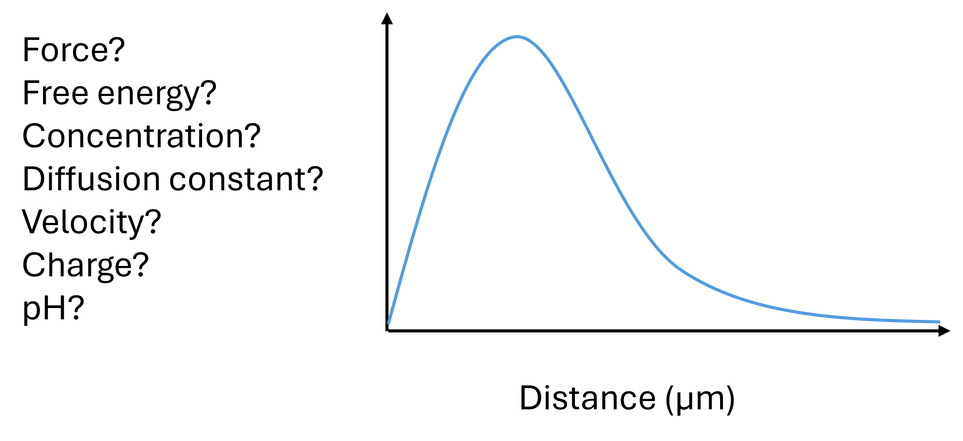
The primary aim of this project is to develop and implement "Plot Twist," a card-based learning tool designed to transform graph literacy from passive recognition into active construction and argumentation. The innovation centres around a generic graph-based framework featuring X-axis, Y-axis, and graph shape cards, supplemented by discipline-specific expansion sets tailored for Physical Chemistry, Physics, and Biomedical Engineering. During the game, students collaboratively construct plausible system behaviours by combining prompts and rigorously justifying the underlying scientific mechanisms. This activity encourages creativity, as students must find appropriate contexts for specific variable relationships, even when they do not have cards that naturally work well together. The project intends to integrate this low-threshold activity into existing tutorials for courses typically involving 50 to 200 students. By strengthening mechanistic reasoning and critical evaluation, the intervention expects to foster deeper conceptual understanding, improve student success rates, and increase active engagement in large tutorial settings, all without increasing teacher workload or fundamentally altering core course content or assessment formats.
This project is still ongoing.
For more information, please contact: