Study guidance built to fit the digital generation
Background and justification of the project
The current generation of students is used to communicate with others via all sorts of analogue and digital ways, with a variety of options to choose their medium, time and place in doing so. For example; you can schedule an appointment with your doctor via an online planner, contact a client helpdesk via WhatsApp and watch tutorials and webinars to get informed about almost anything.
Study guidance activities at the Built Environment TU/e have hardly been updated with regard to the practical use of technological tools, even though technological options have advanced greatly over the years. We absolutely want to keep the proven concept of opening our office to students to have a personal appointment for guidance, advice or study counseling with the academic advisors.
However, we feel we are missing out on ‘modern’ flexible ways of communicating with our students. We now want to experiment expanding our guidance methods by offering additional options that match the reality of students today and in the future. Developing these new options should increase our reach and accessibility.
We want to connect to our students in a way that they should expect from a modern university of technology, like a digital chat- or tailor made (individual and group) e-coaching options and offering guidance tutorials or webinars on common topics*. We want to be more easily accessible for students that experience a threshold to come to our office, either because they are not around, or because taking the initial step to talk to an academic advisor in person might be big for them. Online guidance options might also be a great way to inform/reach groups of students at the same time, in a way that doesn’t require them to be actually present.
* we see quite specific problems arise from the ‘type of education’ in the built environment; causing a lot of students to experience stress and (sometimes severe) insecurities about meeting deadlines, expectations and interpersonal dynamics, their work as a whole (it’s never good enough) and ‘who they should be as a designer’. We think that we could help students a lot better if the academic advisors are more accessible/reachable, coaching and advising them in dealing with these topics via modern and versatile means.
Online coaching methods have been proven to fit the needs of young people’s reality, but in order for it to be successful, it is vital to choose a professional approach to implementing the right tools, the right way. Therefore in implementing tools/options that should get us more up to date; we need help from professionals that set up the (right) tools for the guidance team, we need to secure our privacy/security processes as we work with very personal information on a daily basis, and the academic advisors need training to work with the new guidance tools/options.
Objectives and expected outcomes of the project
Goal: This project is aimed at implementing relevant online coaching & advice tools in the work process of the ESA academic advisors of the Built Environment. Pilot group: Bachelor AUBS
Herewith we would offer a sought after (additional) service, further increasing the accessibility of our academic advice team. We strive to match our current students’ preferences by using communication methods that they use often. Examples of new to be implemented options are;
- Scheduling their own appointments via online agenda planner; (We already requested this in ReFlex, a program used by other advisors and counsellors @ TU/e)
- Chat options (written/video, f.e. like WhatsApp/ Microsoft teams/Pluform)
- E-coaching/advice workshops for students to attend
- Webinars on common topics or FAQ’s.
- All services should be mentioned on a well-updated and clearly arranged TU/e Academic Advisors-Be webpage.
An outcome of the project might be that the program ‘Pluform’ or a similar software program for online coaching is implemented and positively evaluated
Project design and management
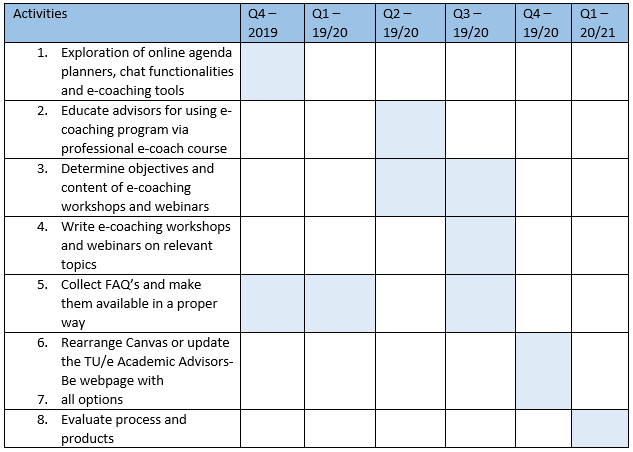
Success can be determined by the user friendliness of the new processes, does it bring more ways for students to easily contact the academic advisors, is it used (often). Risks may lay in software problems, or if the technology is not used as it was designed to, therefore not reaching the student population. Communication is also vital; all users must know that this new ‘service’ is available to them.
Dissemination and sustainability of the project
The academic advisors of AUBS will continue to incorporate the new online tools in their daily work processes when it is evaluated as successful, actively monitoring if the work processes are up to date. They will inform their professional peers in the ‘ketenoverleg’ of the academic advisors TU/e and will invite the peers to join using the work methods if successful. If this new way of study guidance works well, other faculties can also use it.
Larisa Camfferman, chain-owner of study guidance, and Fred Gaasendam will be involved in this project.
Results and learnings
This project is currently still ongoing
FOR MORE INFORMATION, PLEASE CONTACT: