Project 2: AI-assisted innovation in portable plasma technology
About this course
- Lecturers: Job Becker (Coordinator), Guido Klaassen, Bert Sadowski
- Academic level:
- Number of students: 100
- Number of ECTS: 5
- Disciplines: Applied Physics and Science Education, Industrial Engineering and Innovation Sciences
- Status:
- Topic:
Set-up
The course is a multidisciplinary Challenge-Based Learning project wherein students design an innovative portable atmospheric pressure plasma device for a specific real-world application, such as medicine, agriculture, or air-depollution. Throughout the programme, teams explore the miniaturisation of plasma technology while evaluating the economic feasibility, societal impact, and underlying business model of their proposed solution. A unique and central focus of the project is the integration of generative artificial intelligence, which students actively utilise as an innovation partner at every stage of the design process to assist with tasks like literature reviews, brainstorming, and data analysis. Ultimately, the course challenges students to conceptualise a practical engineering solution while critically reflecting on the functionality and added value of AI tools in modern research and innovation pipelines.
Intended Learning Outcomes (ILO’s)
The intended learning outcomes are divided into general project goals and specific project goals:
- Understand, evaluate, and execute an open design process or an open scientific inquiry.
- Acquire, apply, and integrate new disciplinary knowledge and skills.
- Collaborate effectively in a multidisciplinary team.
- Provide and receive constructive feedback through peer-assessment.
- Act responsibly in every stage of the project, considering societal and environmental impact such as resource use and inclusivity.
- Describe the basic electrical, physical, and chemical properties of plasmas.
- Identify the possibilities and limitations of a specific chosen portable plasma application.
- Explore and analyse developments needed for the miniaturisation of the application and assess the potential environmental impact of the innovation.
Assessment
The assessment structure requires both components to be passed with a grade of 5.5 or higher
- Individual Assessment (50%): Evaluated by the lecturer and tutor based on group meeting involvement, co-operation capacity, the quality of self-study assignments, and unique contributions to the group. Peer assessments collected at mid-term and at the end of the course serve as input for this grade. No retake is permitted for this individual component.
- Self-Study Assignments (10%).
- Meetings evaluation (15%).
- Self-reflection reports (Mid-term is 15%, Final is 10%).
- Peer assessment (Formative).
- Group Assessment (50%): Evaluated jointly by the teacher and tutor based on project milestones. A retake is allowed for the group assessment, specifically through the revision of the final report.
- Mid-term evaluation and presentation (10%).
- Final evaluation and presentation (10%).
- Final report (30%).
Learning Activities
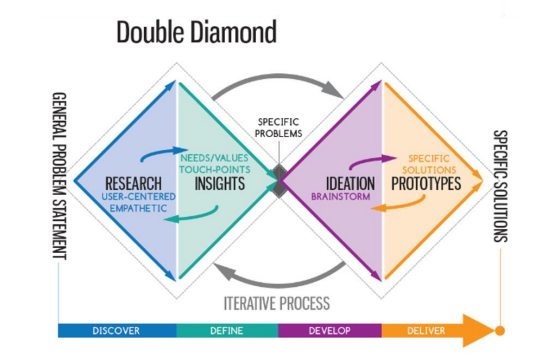
The project follows a Challenge-Based Learning approach structured around the Double Diamond model of discovering, defining, developing, and delivering. Teams conceptualise a design idea and use generative AI in each step to assist with reviewing literature, brainstorming, and analysing data. Students attend plenary lectures on Tuesdays for general skills and participate in weekly progress pitches on Fridays to share insights with other groups. Furthermore, students engage in a hands-on "Build your own plasma workshop" in week 3 to experience the physical creation of a compact plasma device.
Organisation of the course
- Course Guidance: The course is coordinated by Job Beckers, alongside co-lecturers Guido Klaassen and Bert Sadowski.
- Structure: Students are divided into groups (Groups 1 to 7) and are guided by designated tutors Milva Baar and Oisin Rutgers Kearns. Groups meet twice a week on campus with revolving internal roles of chairperson, secretary, and minutes writer. The tutor attends one of these weekly meetings to monitor progress.
Contacts